Showing posts with label Lexus. Show all posts

Lexus CT 200h

The Lexus CT 200h is a hybrid electric automobile introduced by Lexus and is an entry-level luxury hatchback. It made its debut at the March 2010 Geneva Auto Show, six months after the unveiling of the LF-Ch concept car; it is primarily targeted at the European market but will be sold worldwide and was introduced to North American markets at the April 2010 New York International Auto Show. The Lexus CT 200h uses a front MacPherson strut suspension and a rear double wishbone design. Lexus had previously trademarked the names CT 200h, CT 300h, and CT 400h. CT 200h production began at the end of December 2010 with European sales following shortly after. US sales began in March 2011. The CT 200h is powered by the same 1.8 litre VVT-i four-cylinder petrol engine (Toyota's 2ZR-FXE) as used in the Auris and Prius, producing 73 kW and 142Nm of torque, paired with electric motor/generators in the hybrid drive system; together the engine and electric motors produce up to 100 kW and 207Nm of torque. Fuel consumption for the CT 200h is listed at 4.1 l/100 km in Australia. The CT 200h has several driving modes Normal, Sport, Eco and EV included on other hybrid drive vehicles. Sport mode modifies the throttle and electric power steering settings, while making the Stability control and traction control less intrusive, maximising the CT200h's performance. EV mode generates zero emissions at the vehicle by using only the vehicles electric motors to drive the vehicle. Safety features include vehicle stability control (VSC) and eight standard airbags with the options of a pre-collision system with dynamic radar cruise control at extra cost. The chassis is based on the Toyota MC platform, which is the same platform used by the Corolla and the Matrix.


2011 Lexus CT200h Review


The little hybrid hatchback needs an attractive price if Lexus has any hope of selling 1,000 CTs each month in U.S. The rumoured base price of $29,120 would be enough to get a very good traffic in Lexus dealerships. This pricing data was leaked a day ahead of its planned arrival. Lets assume that these prices are accurate, the 2011 CT 200h will be the least expensive new Lexus sold in America. The base price for the IS series and HS 250h hybrid sedan is several thousand dollars higher. The Union of Concerned Scientists (UCS) in its 2011 Hybrid Scorecard ranked the Lexus CT200h, together with the Lincoln MKZ Hybrid, as the top luxury hybrid models in the scorecard’s environmental improvement category, an achievement the UCS attributed to their relatively small gasoline engines, as both carmakers downsized these vehicles’ engines from six to four cylinders to maximize fuel economy. The UCS evaluation found that the Lexus CT200h reduces greenhouse emissions by 42.9% as compared to the Lexus IS 250, used as its gasoline-only similar for this comparison.


Standard features on the CT 200h include SmartAccess with push-button Start/Stop and touch sensors on exterior front-door handles, leather steering wheel, a six-speaker, audio system with a CD player, and Bluetooth phone connectivity, iPod connectivity, 17-inch aluminum alloy wheels, and dual zone automatic climate control. In Australia, the CT 200h is offered in "Prestige", "Luxury", "F Sport" and "Sport Luxury" specifications. The Luxury, F Sport and Sports Luxury variants add a reversing camera as standard, while the Sports Luxury gains active cruise control and the pre-collision safety system. F Sport models include all the features of the Sport Luxury model, plus sports bumpers, sports side skirts and a large rear spoiler. Interior features of the F Sport are an F Sport steering wheel, sports pedals, scuff plates, instrument panel and privacy glass. At the 2011 Australian Formula One Grand Prix in Melbourne (25–27 March 2011), the Lexus CT200h was used in the Celebrity Challenge, a one-make, one-off series event held as part of the Grand Prix's weekend attractions. The event, supported by CAMS and sponsored by Lexus Australia, was promoted as the world's first race containing only petrol-electric vehicles. In the United Kingdom, Australian pop superstar Kylie Minogue was invited to be the spokesperson for the new CT200. She has recorded a TV advertisement and the press release of the car will feature Minogue. In the United Kingdom, the CT200 will be one of the sponsors of Minogue's latest concert tour, Aphrodite World Tour.The estimated US EPA fuel economy is 43 miles per US gallon (5.5 L/100 km; 52 mpg-imp) in the city and 40 miles per US gallon (5.9 L/100 km; 48 mpg-imp) on the highway, while utilising regular 87-octane fuel. Canadian fuel consumption ratings are 4.5 litres per 100 kilometres (63 mpg-imp; 52 mpg-US) city, 4.8 litres per 100 kilometres (59 mpg-imp; 49 mpg-US) highway, and 4.6 litres per 100 kilometres (61 mpg-imp; 51 mpg-US) combined.

Lexus CT 200h

The Lexus CT 200h is a hybrid electric automobile introduced by Lexus and is an entry-level luxury hatchback. It made its debut at the March 2010 Geneva Auto Show, six months after the unveiling of the LF-Ch concept car; it is primarily targeted at the European market but will be sold worldwide and was introduced to North American markets at the April 2010 New York International Auto Show. The Lexus CT 200h uses a front MacPherson strut suspension and a rear double wishbone design. Lexus had previously trademarked the names CT 200h, CT 300h, and CT 400h. CT 200h production began at the end of December 2010 with European sales following shortly after. US sales began in March 2011. The CT 200h is powered by the same 1.8 litre VVT-i four-cylinder petrol engine (Toyota's 2ZR-FXE) as used in the Auris and Prius, producing 73 kW and 142Nm of torque, paired with electric motor/generators in the hybrid drive system; together the engine and electric motors produce up to 100 kW and 207Nm of torque. Fuel consumption for the CT 200h is listed at 4.1 l/100 km in Australia. The CT 200h has several driving modes Normal, Sport, Eco and EV included on other hybrid drive vehicles. Sport mode modifies the throttle and electric power steering settings, while making the Stability control and traction control less intrusive, maximising the CT200h's performance. EV mode generates zero emissions at the vehicle by using only the vehicles electric motors to drive the vehicle. Safety features include vehicle stability control (VSC) and eight standard airbags with the options of a pre-collision system with dynamic radar cruise control at extra cost. The chassis is based on the Toyota MC platform, which is the same platform used by the Corolla and the Matrix.


2011 Lexus CT200h Review

The little hybrid hatchback needs an attractive price if Lexus has any hope of selling 1,000 CTs each month in U.S. The rumoured base price of $29,120 would be enough to get a very good traffic in Lexus dealerships. This pricing data was leaked a day ahead of its planned arrival. Lets assume that these prices are accurate, the 2011 CT 200h will be the least expensive new Lexus sold in America. The base price for the IS series and HS 250h hybrid sedan is several thousand dollars higher. The Union of Concerned Scientists (UCS) in its 2011 Hybrid Scorecard ranked the Lexus CT200h, together with the Lincoln MKZ Hybrid, as the top luxury hybrid models in the scorecard’s environmental improvement category, an achievement the UCS attributed to their relatively small gasoline engines, as both carmakers downsized these vehicles’ engines from six to four cylinders to maximize fuel economy. The UCS evaluation found that the Lexus CT200h reduces greenhouse emissions by 42.9% as compared to the Lexus IS 250, used as its gasoline-only similar for this comparison.


Standard features on the CT 200h include SmartAccess with push-button Start/Stop and touch sensors on exterior front-door handles, leather steering wheel, a six-speaker, audio system with a CD player, and Bluetooth phone connectivity, iPod connectivity, 17-inch aluminum alloy wheels, and dual zone automatic climate control. In Australia, the CT 200h is offered in "Prestige", "Luxury", "F Sport" and "Sport Luxury" specifications. The Luxury, F Sport and Sports Luxury variants add a reversing camera as standard, while the Sports Luxury gains active cruise control and the pre-collision safety system. F Sport models include all the features of the Sport Luxury model, plus sports bumpers, sports side skirts and a large rear spoiler. Interior features of the F Sport are an F Sport steering wheel, sports pedals, scuff plates, instrument panel and privacy glass. At the 2011 Australian Formula One Grand Prix in Melbourne (25–27 March 2011), the Lexus CT200h was used in the Celebrity Challenge, a one-make, one-off series event held as part of the Grand Prix's weekend attractions. The event, supported by CAMS and sponsored by Lexus Australia, was promoted as the world's first race containing only petrol-electric vehicles. In the United Kingdom, Australian pop superstar Kylie Minogue was invited to be the spokesperson for the new CT200. She has recorded a TV advertisement and the press release of the car will feature Minogue. In the United Kingdom, the CT200 will be one of the sponsors of Minogue's latest concert tour, Aphrodite World Tour.The estimated US EPA fuel economy is 43 miles per US gallon (5.5 L/100 km; 52 mpg-imp) in the city and 40 miles per US gallon (5.9 L/100 km; 48 mpg-imp) on the highway, while utilising regular 87-octane fuel. Canadian fuel consumption ratings are 4.5 litres per 100 kilometres (63 mpg-imp; 52 mpg-US) city, 4.8 litres per 100 kilometres (59 mpg-imp; 49 mpg-US) highway, and 4.6 litres per 100 kilometres (61 mpg-imp; 51 mpg-US) combined.

2012 Lexus GS


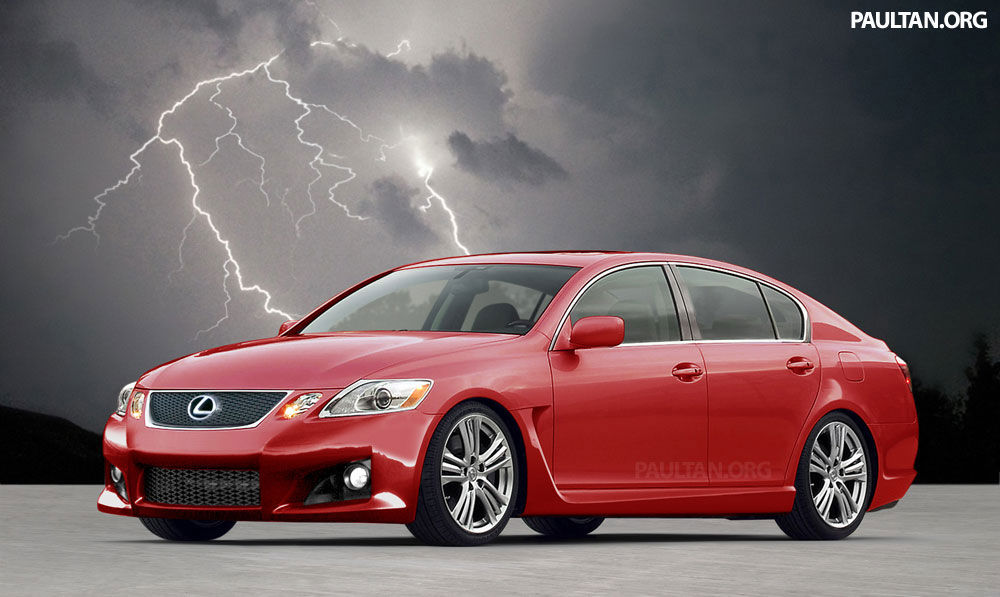
The Lexus GS is a series of mid-size luxury sports sedans / executive cars sold by Lexus since 1993. Designed to fill the gap between the ES and LS, and to provide Lexus with a performance sedan to compete in the mid-luxury class, three generations of the GS have been produced to date. The first incarnation of the GS was introduced in 1993 in the United States, Europe and selected markets in Asia. The second generation model premiered in 1998, using a new platform and adding a V8 version for the first time outside Japan. The current third generation GS, which premiered globally for the 2006 model year, comes in both V6, V8, and hybrid versions, later known as the GS 450h performance hybrid. The third generation GS is also the first model to feature Lexus' own L-finesse styling upon its introduction.

White Elegant Lexus GS Wallpaper


All About Lexus GS


Black Lexus GS on parking Area


Silver Lexus GS Front View


Lexus GS with Orange Edition


Silver Lexus GS Performance


2012 lexus GsLf - Gh Concept

2012 Lexus Concepts cars review

2012 Lexus Concepts cars wallpaper gallery http://cars-bikes-prices.blogspot.com/2011/08/2012-lexus-hybrids-cars-review.html
2012 Lexus Concepts cars2012 Lexus Concepts cars2012 Lexus Concepts cars2012 Lexus Concepts cars2012 Lexus Concepts cars

2012 Lexus Hybrids cars review

2012 Lexus Hybrids cars review

2011 Lexus Gs

The Lexus GS is a series of mid-size luxury sports sedans / executive cars sold by Lexus since 1993. Designed to fill the gap between the ES and LS, and to provide Lexus with a performance sedan to compete in the mid-luxury class, three generations of the GS have been produced to date. The first incarnation of the GS was introduced in 1993 in the United States, Europe and selected markets in Asia. The second generation model premiered in 1998, using a new platform and adding a V8 version for the first time outside Japan. The current third generation GS, which premiered globally for the 2006 model year, comes in both V6, V8, and hybrid versions, later known as the GS 450h performance hybrid. The third generation GS is also the first model to feature Lexus' own L-finesse styling upon its introduction.

In Japan, the equivalent Toyota Aristo (トヨタ・アリスト) was sold from its 1991 debut until the introduction of the Lexus marque and the third generation GS in 2005. Though largely identical in exterior and interior design, the first two generations of the GS and the Aristo differed in their engine and transmission combinations as well as equipment packages. The Aristo nameplate ("Aristo" is Greek for "the best") was discontinued following the debut of the Lexus marque and the third generation GS in Japan.

Styled by the famous Italdesign Giugiaro firm, and equipped with an independent, double-wishbone suspension setup, the Toyota Aristo was launched in October 1991, offering two inline-6 powered versions for the Japanese market: the 3.0Q and 3.0V. The Aristo 3.0Q (codename JZS147) featured a 2JZ-GE engine which produced 226 hp (169 kW), while the Aristo 3.0V (JZS147) was equipped with a 24-valve twin-turbo 2JZ-GTE engine which produced 276 hp (205 kW). This twin-turbo engine was the same as could be found in the Toyota Supra RZ (JZA80). In 1992, a third model, the V8-powered 4.0Zi-Four (codename UZS143), joined the Aristo lineup. This model came with standard four-wheel drive and a 250 hp (186 kW) 1UZ-FE engine. This V8 had also been used in the first generation Lexus LS and the Toyota Crown Majesta. However, the only engine available for export markets was the 2JZ-GE inline-6.

In February 1997, Lexus debuted the "High Performance Sedan" (HPS) concept at the Chicago Auto Show, previewing the design direction for the redesigned GS. In August 1997, the second generation Aristo was launched in Japan, codenamed JZS160 (S300 version) for models with the 2JZ-GE engines and JZS161 (V300 version) for those with the 2JZ-GTE twin-turbo engines. VVT-i was now standard, resulting in a bump in torque. The twin-turbo version was available with electronic four-wheel steering, stability control and an automatic gearbox with a manual sequential mode. No four-wheel drive models were offered.

The 2000 model facelift, first sold in the 2001 model year in North America, was the only year with any major changes in the second generation GS. New clear tail lights with turn signal indicators were added to the trunk area, as well as a slightly revised grille and very subtly tinted headlights on the front end. Xenon high-intensity discharge headlights were now standard on the V8 and optional on the I6. Inside, more wood trim was added, and steering wheel shift buttons were now also featured on the GS 300. The V8 engine also received a 0.3-liter bump in displacement and the model was renamed GS 430 (UZS161). Peak horsepower was unchanged, but torque increased to 325 lb·ft (441 N·m).

The GS interior was available with leather bird's-eye maple or walnut trim. Major standard features ranged from a 10-way driver and front passenger power and heated seats with three-position Lexus Memory System, SmartAccess keyless system with push-button start, a driver-side hidden drop-down panel for infrequently used controls, standard 7-inch touchscreen display, and LED lighting in the cabin. Unique to the Lexus GS series was a three-pod instrument cluster with machined aluminum facings and an electrochromic feature. Optional features ranged from a power moonroof to a discrete 5.1 surround sound 14-speaker 330 watt Mark Levinson premium sound system, XM-satellite radio and DVD-based navigation with backup camera and Bluetooth technology. Competitors to the Lexus GS included the BMW 5-Series, Mercedes-Benz E-Class, Volvo S80, Audi A6, Jaguar XF, Infiniti M, and Acura RL.


The Lexus GS was used in Motorola Cup North American Street Stock Championship touring car series competition in 1998, beginning with two GS 400 race vehicles driven by Team Lexus in its inaugural season. For 1999, Team Lexus achieved its first victory with the GS 400 in its sixth race at Road Atlanta. The GS 400 was raced until 2001, when Team Lexus switched to the IS 300. In the mid 2000s, the GS 400 was entered in the V8Star Series touring car racing season, with Ronny Melkus competing in the V8 GS in 2003.


According to Motor Trend, the next generation GS will debut in 2011. The LF-Gh concept vehicle revealed at the 2011 New York International Auto Show has revealed what the fourth generation Lexus GS will look like.


Red Lexus Gs 2011 Wallpaper

Lexus planeja lan�ar vers�o roadster do LF-A

Lexus planeja lan�ar vers�o roadster do LF-A

Modelo deve entrar no mercado s� a partir de 2014.


Tr�s anos ap�s apresentar ao mundo o conceito LF-A roadster, a Lexus sinalizou a possibilidade de colocar em produ��o o modelo, que deve entrar no mercado a partir de 2014, j� que a marca pretende aguardar o fim da produ��o da gera��o LF-A cup�, em 2013.

A primeira gera��o do LF-A cup� representou uma s�rie limitada, de 500 apenas unidades. Para a Lexus, o momento � de se preparar para finalizar uma etapa e focar na vers�o convers�vel, que n�o ser� produzida em n�mero limitado.

Ainda sobre os planos futuros da marca, segundo a �Automotive News�, o desejo de lan�ar um crossover, denominado de VX, foi adiado ap�s anos de estudo. Assim, restam apenas algumas reestiliza��es nos modelos j� existentes. O RX ser� redesenhado em 2014, utilizando melhorias provenientes da plataforma do Toyota Camry. J� o GX e LX n�o devem sofrer grandes mudan�as nos pr�ximos anos


Fonte: Quatro Rodas

Video: Motor Trend Drifts the Lexus LFA


Lexus’ first supercar, the LFA, looks more sinister than Darth Vader himself – especially in black. But it is indeed a very rare piece, which shouldn’t come to as a surprise considering that only 500 examples will be built each priced at a hefty $375,000. Read more »

First Spy Shots of 2013 Lexus GS Sedan


Well now, that didn’t take long, did it? Less than three months after the presentation of the LF-Gh concept car at the 2011 New York International Auto Show and Lexus has already started testing the production model that will spawn a successor to today’s GS sedan at the Nürburgring circuit.
Naturally, the Lexus GS prototype is covered in plenty of camouflage but not to the point that it discloses its styling similarities to the LF-Gh study.

Aside from the body proportions, details like the protruding side sills, the high rising belt line, the “dotted” LEDs and large grille up front, and even the alloy wheel designs, appear remarkably faithful to the concept.

First Spy Shots of 2013 Lexus GS Sedan


Well now, that didn’t take long, did it? Less than three months after the presentation of the LF-Gh concept car at the 2011 New York International Auto Show and Lexus has already started testing the production model that will spawn a successor to today’s GS sedan at the Nürburgring circuit.
Naturally, the Lexus GS prototype is covered in plenty of camouflage but not to the point that it discloses its styling similarities to the LF-Gh study.

Aside from the body proportions, details like the protruding side sills, the high rising belt line, the “dotted” LEDs and large grille up front, and even the alloy wheel designs, appear remarkably faithful to the concept.

First Spy Shots of 2013 Lexus GS Sedan


Well now, that didn’t take long, did it? Less than three months after the presentation of the LF-Gh concept car at the 2011 New York International Auto Show and Lexus has already started testing the production model that will spawn a successor to today’s GS sedan at the Nürburgring circuit.
Naturally, the Lexus GS prototype is covered in plenty of camouflage but not to the point that it discloses its styling similarities to the LF-Gh study.

Aside from the body proportions, details like the protruding side sills, the high rising belt line, the “dotted” LEDs and large grille up front, and even the alloy wheel designs, appear remarkably faithful to the concept.

Union of Concerned Scientists Releases 2011 Hybrid Scorecard: Prius = Good, Touareg Hybrid = Bad


The Union of Concerned Scientist, a non-profit science advocacy group in the U.S., has released its second annual Hybrid Scorecard. The organisation criticised hybrid car manufacturers for not delivering on the technology’s promise, for placing performance above fuel efficiency and environmental benefit and burdening hybrids with features that put them out of the price range of average Americans.
A total of 34 hybrid vehicles from the 2011 to 2012 model year were tested for their fuel efficiency, environmental impact, value-for-money and their so-called “forced-feature premium”. The latter is features that don’t improve fuel efficiency but probably make the cars more appealing to money-conscious consumers.